
Making Ducklings
Incubation and what I learned as a first-timer

I wanted to write a bit about my experience hatching my own Rouen ducklings and what I learned or realized along the way.
Getting Started:
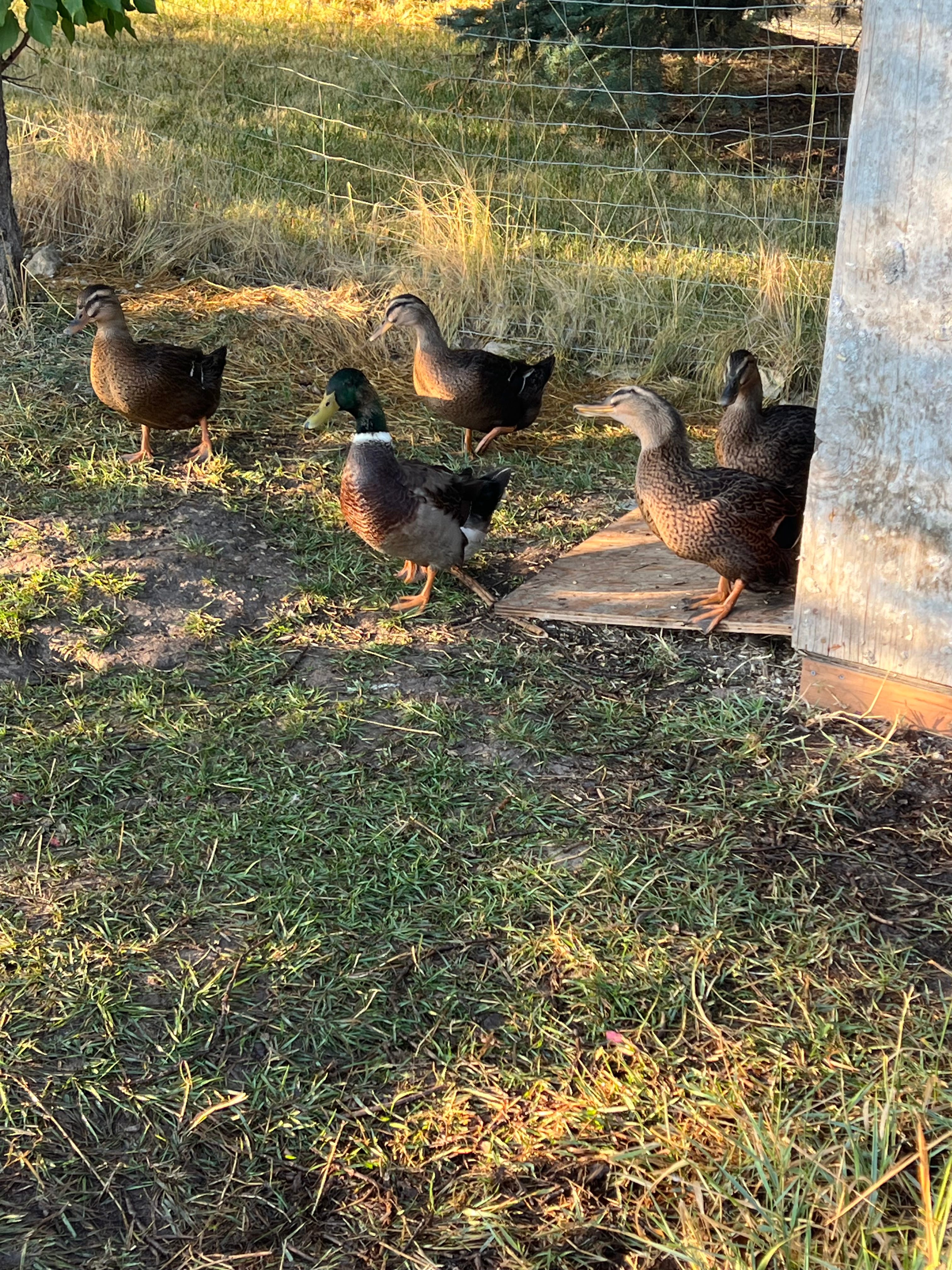
It’s always amazing to me how many things are super obvious but that I’ve never given any time/bandwidth to. For example, I never thought about the fact that I could take a wild duck up to 2 weeks to lay her clutch of eggs depending on how many she wants to sit. Those eggs just sit and wait for the incubation to start - isn’t nature AMAZING?!? Once mama duck decides to sit all the eggs start the 28 day clock at the same time and they’ll all hatch within hours of each other. Just incredible. Also — with a good ratio of male to female ducks (we are 1-4) most eggs end up fertilized!!
I was lucky enough to borrow a really nice incubator from a friend. It has a self turning plate inside so I didn’t need to remember to manually turn eggs 3-5 times a day. It also regulates temp and humidity as long as I kept water in the reservoir. Another cool feature is a built in light for candling eggs! I used the Nurture Right 360 which can accommodate up to 15 duck eggs or I think 22 chicken eggs.
Selecting the eggs to incubate:
Picking the eggs is definitely a balance of making the best guess and trying to weed out any with obvious imperfections like tiny cracks. Candling the eggs can show cracks. Also the eggs should be gently finger brushed clean, not wiped or cleaned with water which could damage or remove the protective coating - the bloom.
Putting the eggs in the incubator:
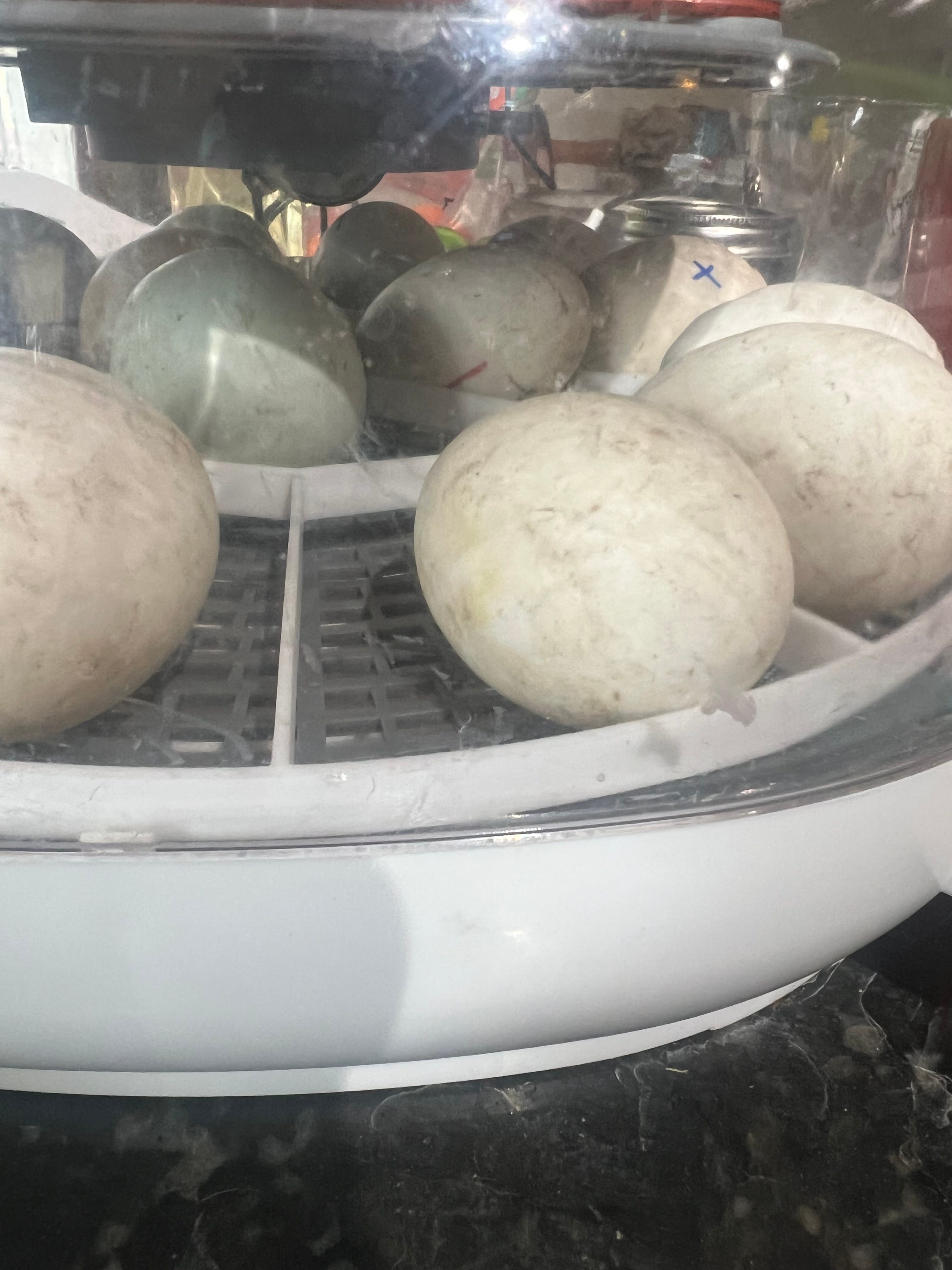
The only lesson I really learned here is to remember that the rotating tray moves the eggs around in a circle, if you put the eggs fat end towards the middle they rotate at a weird sideways angle and end up trying to climb out of their slot 🤣. Small end towards the middle, it’s just physics.
The Process:
Duck eggs incubate at 99.5 degrees Fahrenheit for 28 days. Humidity of around 45-50% during the first 25 days and then boosting up closer to 70% for the final 3 days. Those little stinkers are born into a sweaty sauna box. I would absolutely die in those conditions but it’s ideal for baby ducks. 😊.
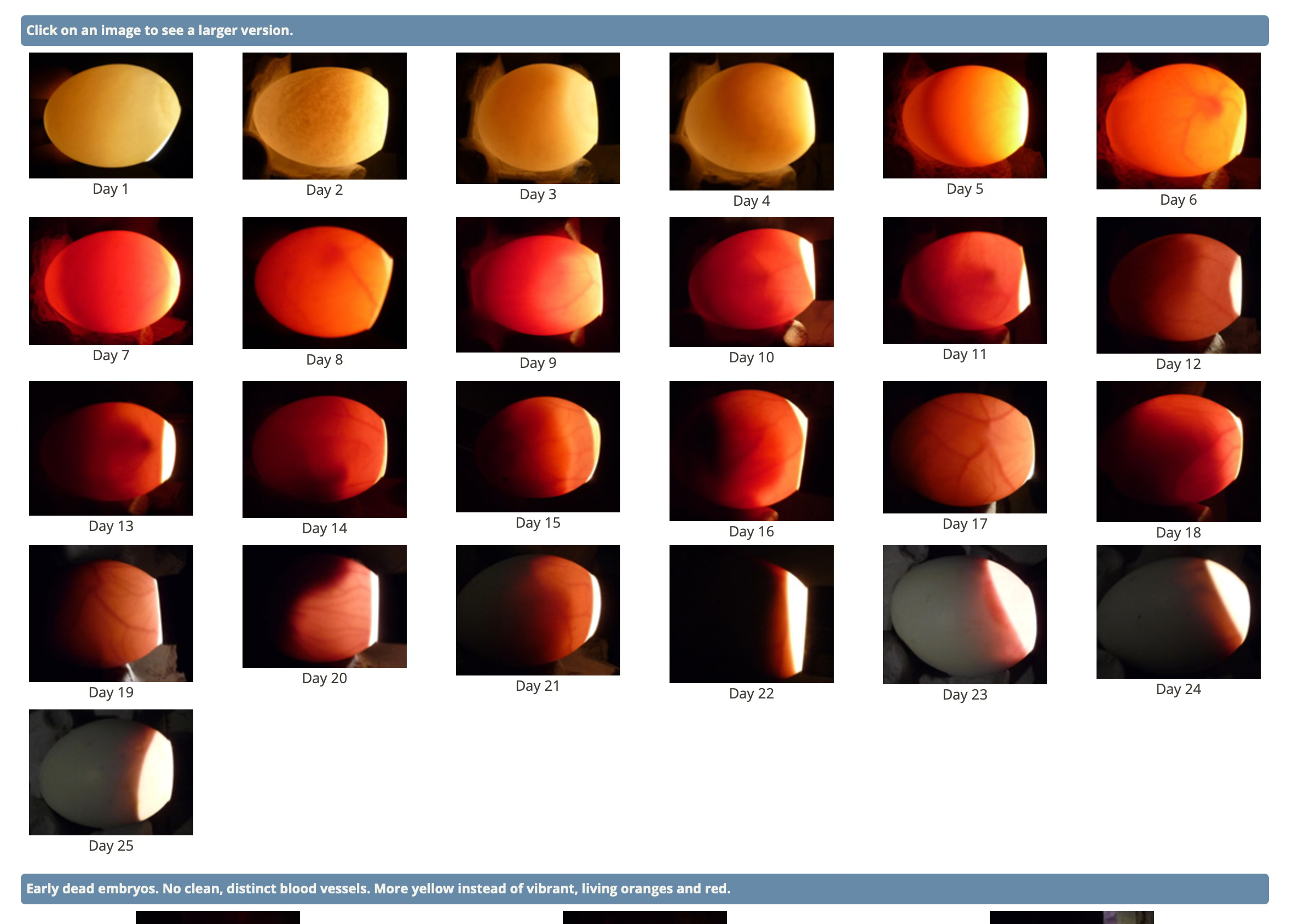
At about day 7 I candled the eggs for the first time to check if there was development.
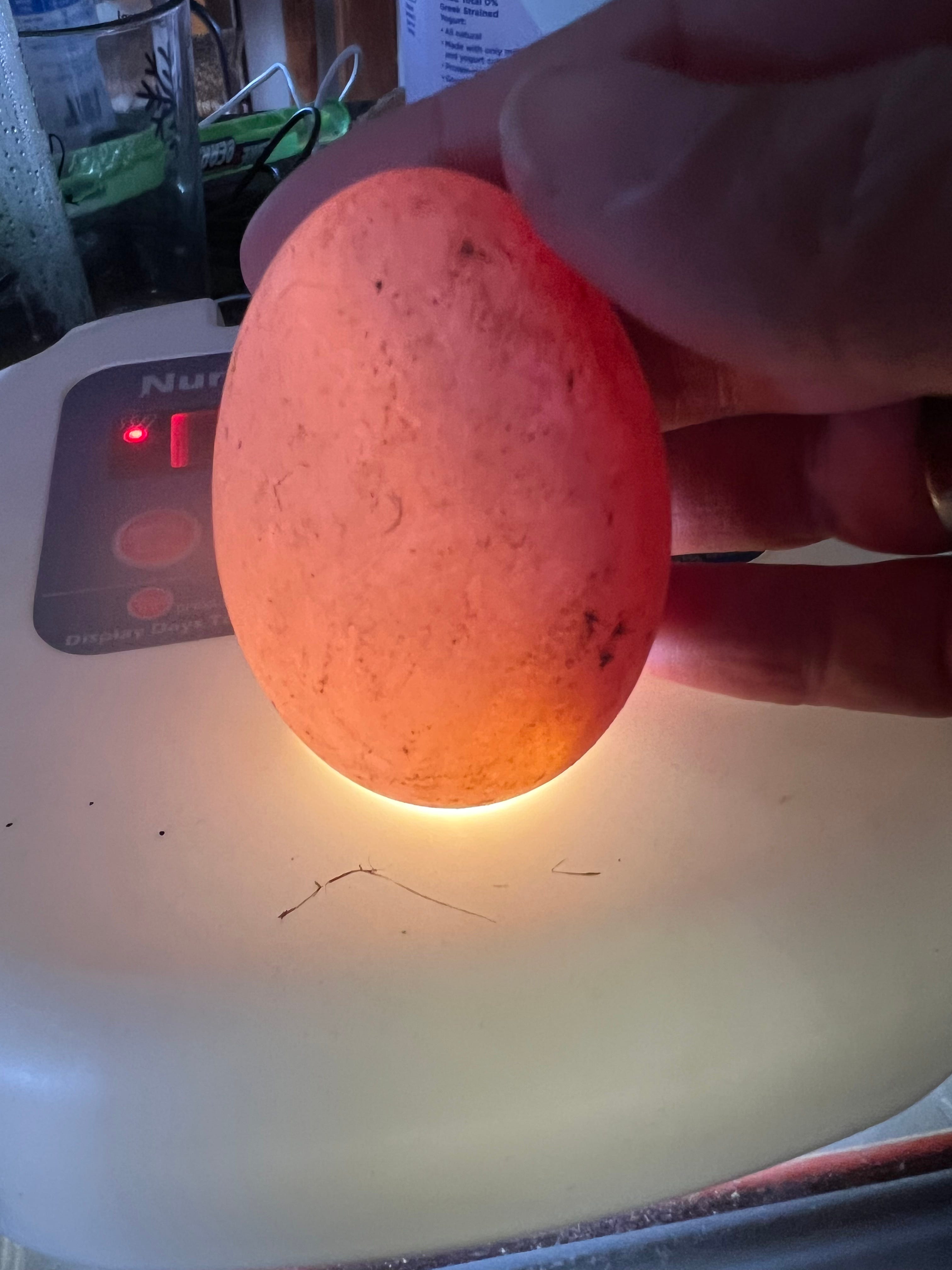
For 14/15 eggs I saw the characteristic veiny spider looking blob that indicates the egg is fertilized and starting to grow. On the one dud it just looked like a normal yolk inside the egg. Since it was my first time incubating eggs I didn’t immediately discard this one, just marked it and decided to keep an eye on it. In hindsight - I’ll likely remove any unfertilized eggs like this right away and feed them to my dogs - no waste here! I used resources from metzer farms including their candling chart to check my progress. Metzer farms is where I ordered my original 5 ducks and they’re a great family business!!
Hatching:
I started to notice “pips” or the first cracking in the eggs the night of day 27, right on time.
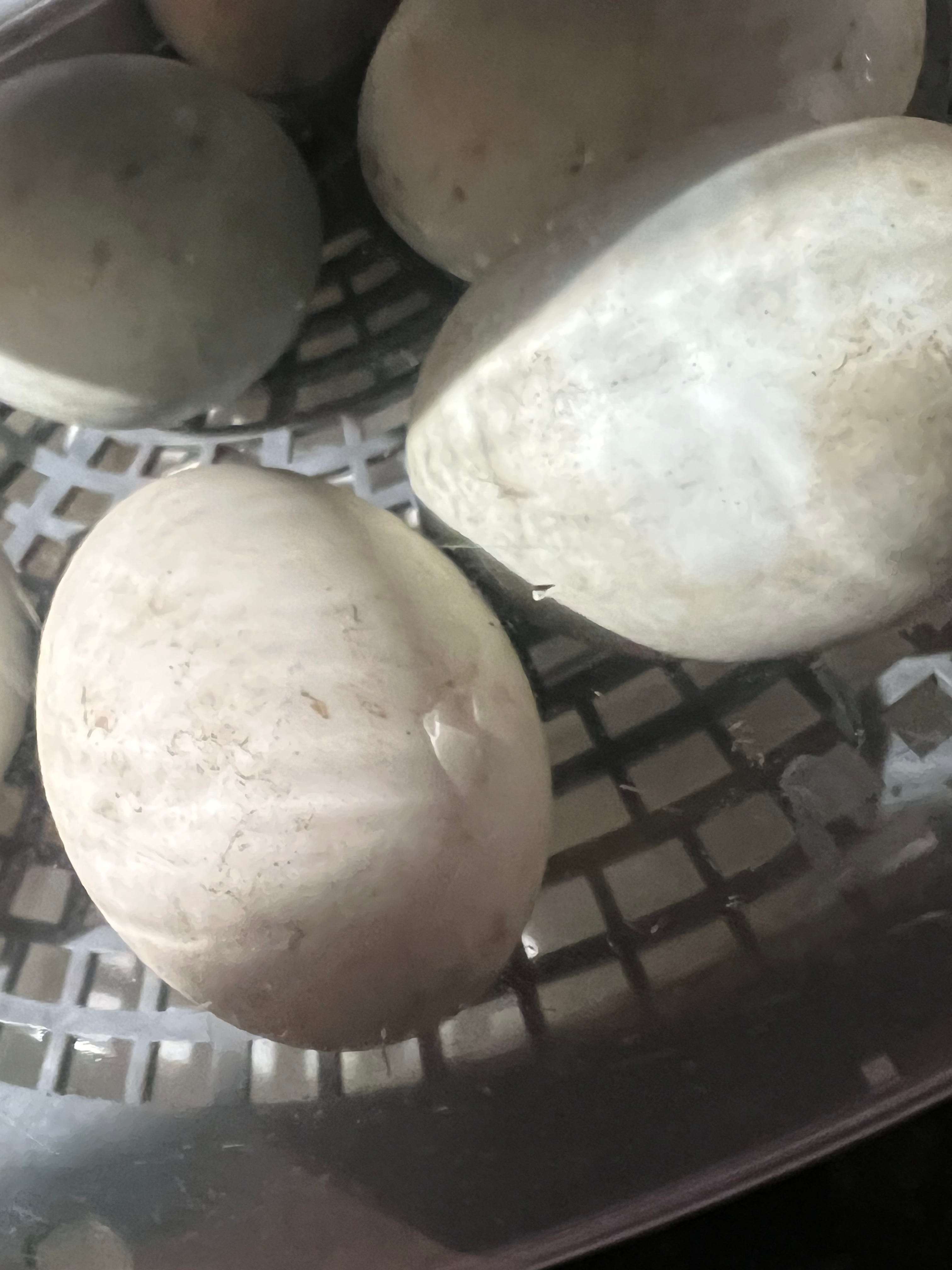
Ducks typically take 12-48 hours to emerge from the shell after that first pip. We woke up on the morning of day 28 to 5 ducklings and 5 more hatched within the next 5 hours. That got us up to 10 with 4 eggs left in the incubator. 1 more hatched spontaneously overnight between the 28th and 29th day and the last one struggled really long and hard and had to have a tiny bit of help to enlarge its escape hole on the afternoon of the 29th day. I candled the last 2 eggs to see if there was any movement and seeing absolutely none I discarded them. Highly successful first attempt at hatching my own ducks!! If I can find a market for ducklings I will absolutely be doing this again.
After Hatching:
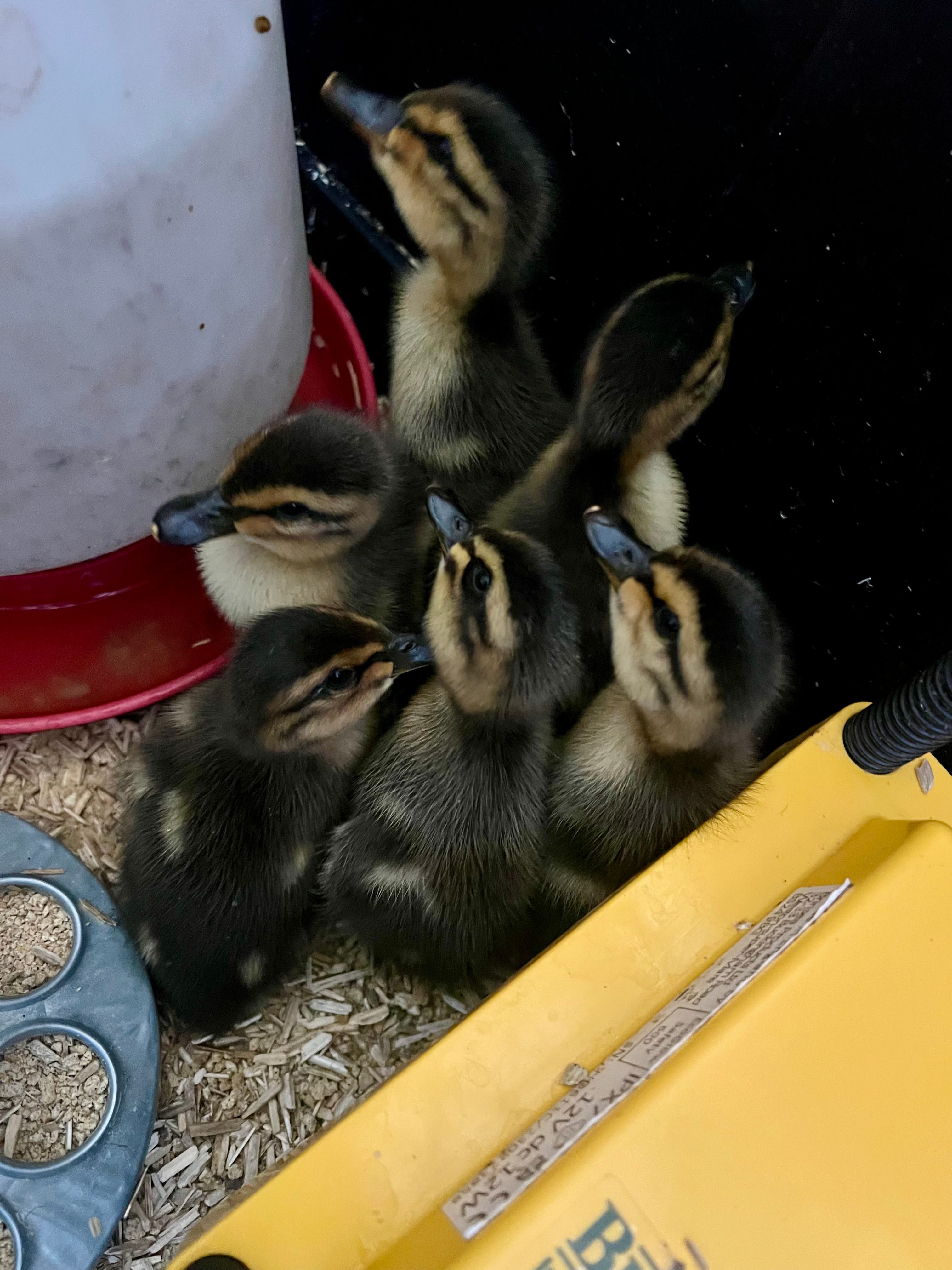
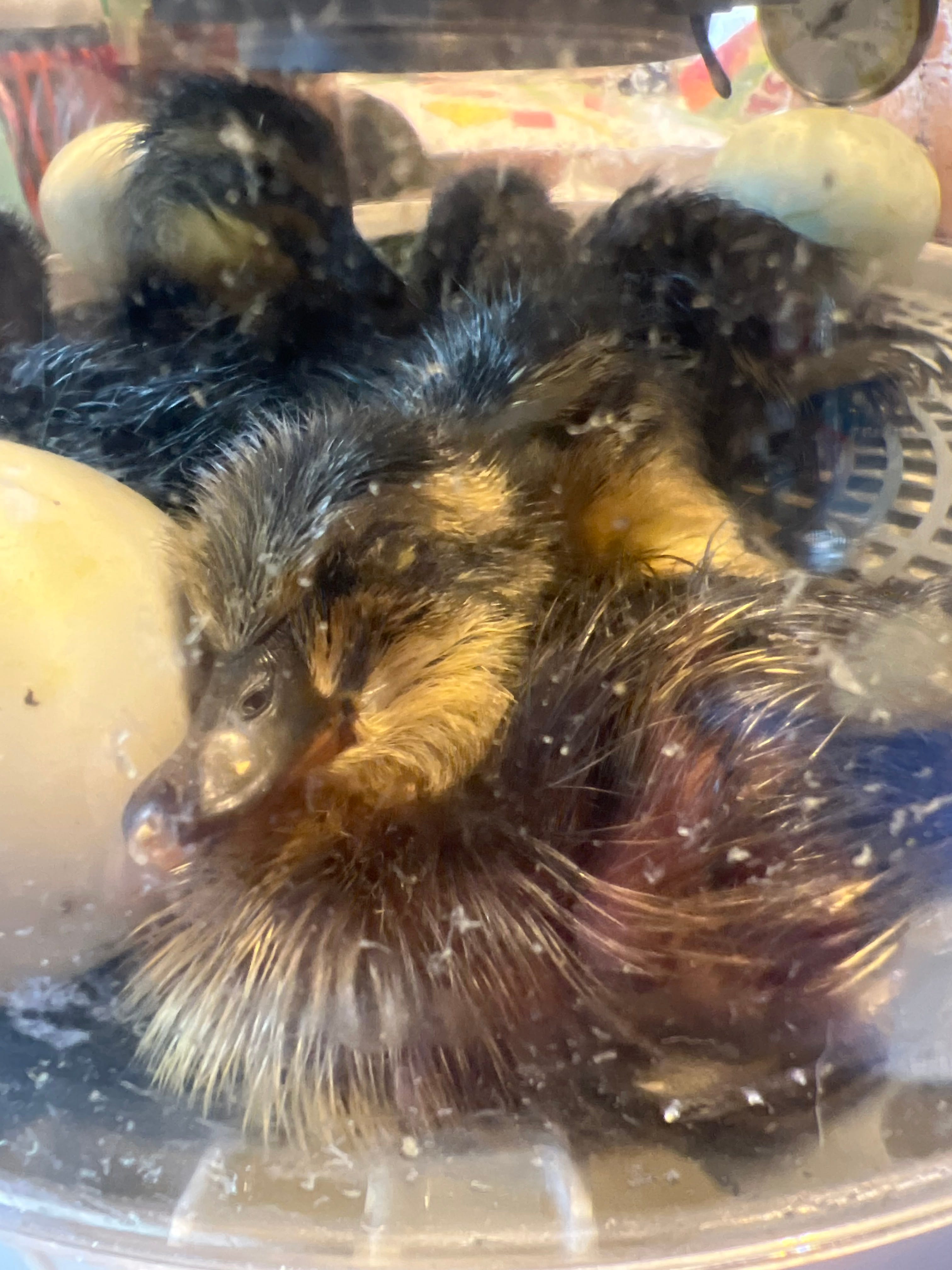
We moved the ducklings from the incubator into their new home - one of the durable black tote storage containers with a Brinsea brooder, water and flock raiser duckling food. We kept the ducklings in the incubator for several hours until they had started to dry out and fluff out a little bit. I did quickly open the incubator a couple times to remove some of the shells to make more room for the ducklings, 5-10 of them in there is quite the pile. Ducks are still nourished by the egg yolk and don’t need to eat for 12ish hours after being born, pretty incredible that a duck lays an egg EVERY DAY with this much potential. Our ducks clustered under the brooder for the first day and by the next morning they had all found the food and water all by themselves and were happily eating and making a mess. Nature is incredible. I’m so thankful to be a part of this process.
Things I’m considering in the future:
I will be putting dates the eggs were laid on the egg in pencil to see if that has any bearing on success - does being the earliest laid egg matter? The egg laid closest to going into the incubator?
I will be switching out eggs from the outer ring into the middle more often so no egg is stuck in the middle for more than a couple days at a time, they just don’t rotate quite as well in there.
I’ll take more pictures of the whole process!!!
Thanks for following along!! Is there anything you’d like more information or details on? If so let me know in the comments. Thank you!!
I genuinely appreciate every single one of my followers - all my content will always be free, but I do offer a paid subscription for those with desire and means. No pressure at all, or if a subscription isn’t your thing I do have an option for a single time small donation. Have a wonderful day!!
Thanks again!! <3 Mariah
Amazing, learned a lot. I just marvel that YOU have time to learn all this!
This was a fascinating read! I am not likely to do this process myself right now, but it's really interesting to know more about how the world works. I had no idea about the fact all the eggs regardless of order laid would have the same 28 day clock from beginning of incubation, but I guess it makes sense! You should definitely keep track of the order of laying and see if it has bearing on the end result. Very cool!!! Thanks for sharing